
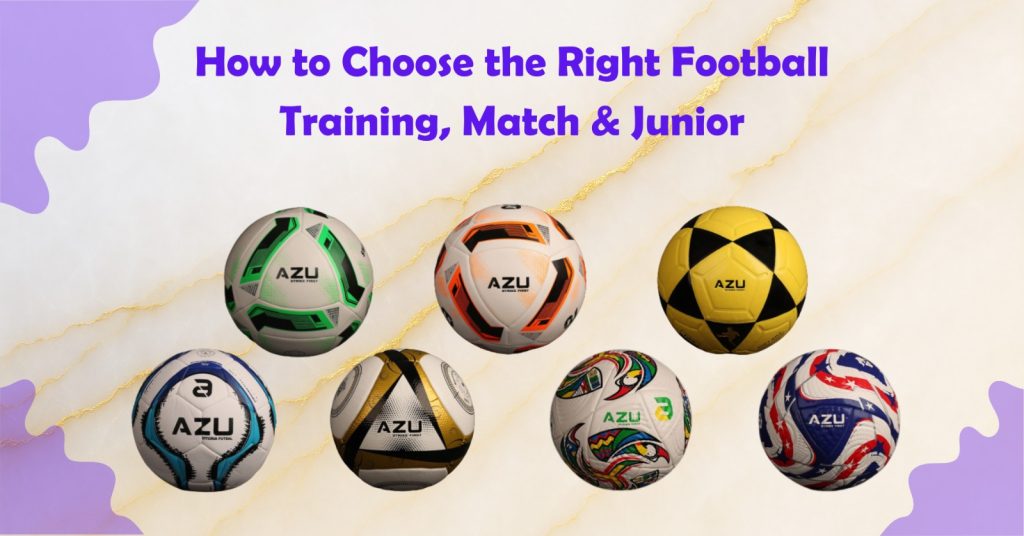
How to Choose the Right Football: Training vs Match vs Junior Explained
Choosing the right football might seem simple, but using the wrong type can quietly affect performance, durability, and even player development, especially for juniors. Footballs are designed for specific purposes, and understanding the differences between training, match, and junior footballs helps you get better value and better results on the pitch.
This explains those differences clearly, so players, parents, and clubs can choose the right football with confidence.
Why Choosing the Right Football Matters
Not all footballs are built the same. A ball designed for match play focuses on precision and feel, while a training football is built to withstand repeated use. Junior footballs add another layer, with size and weight designed to support proper skill development rather than adult-level power.
Using the wrong football can lead to:
- faster wear and tear
- Inconsistent touch and control
- frustration or slower progress for junior players
- unnecessary replacement costs
Choosing the right football improves performance and helps the equipment last longer.
Training Footballs: Built for Durability
Training footballs are designed to handle frequent use across multiple sessions each week. They’re the most practical option for clubs, schools, and players who train regularly.
These footballs prioritise toughness over elite feel. They’re made with stronger outer materials and construction methods that help them retain shape and cope with repeated impact, whether on grass or artificial turf.
You’ll usually notice that training footballs feel slightly firmer than match balls. That’s intentional. They’re built to survive heavy workloads rather than deliver match-day finesse.
You can explore training footballs available at AZU Sports here:
Training footballs are best suited to:
- regular training sessions and drills
- clubs running multiple sessions per week
- schools and academies
- Players focused on skill repetition
Match Footballs: Designed for Performance
Match footballs are built for competitive play, where consistency, flight, and touch matter most. Construction focuses on precision rather than long-term durability, which is why these balls feel noticeably different during games.
Match footballs typically offer a softer outer and more refined balance, helping passes, shots, and movement feel predictable at game speed. Many are produced to meet recognised performance standards, which is why they’re trusted for official matches.
Because they’re built for performance, match footballs wear out faster if used for daily training. Most teams reserve them for games and important sessions only.
You can view the Match footballs stocked by AZU Sports here:
Match footballs are ideal for:
- competitive teams
- match-day use
- players prioritising feel and accuracy
Junior Footballs: Supporting Player Development
Junior footballs are designed specifically for younger players. They’re not just smaller versions of adult balls; they’re scaled to suit developing strength, coordination, and technique.
Using an adult-sized football too early can make basic skills harder to learn and often affects confidence. Junior footballs reduce that barrier, allowing young players to focus on control, passing, and shooting mechanics.
General size guidance:
- Size 3: younger children developing coordination
- Size 4: most junior players building strength and skill
- Size 5: older juniors transitioning to adult play
You can browse footballs at AZU Sports here:
Choosing the correct size helps young players develop safely and effectively.
Training vs Match Footballs: What’s the Real Difference?
The difference isn’t about quality, it’s about purpose. Training footballs are built to last, while match footballs are built to perform under competitive conditions.
For most players and clubs, the best setup is simple:
- training footballs for everyday practice
- match footballs reserved for games
This approach keeps costs down and ensures each ball is used the way it was designed.
Choosing the Right Football for Your Needs
A simple way to decide:
- Training multiple times a week? Choose a training football.
- Playing competitive matches? Use a match football for games.
- Buying for a child or junior player? Select the correct junior size.
- Buying for a team or club? Invest mainly in training footballs, with a smaller number of match balls.
If you’re unsure, starting with a durable training football in the correct size is often the safest and most cost-effective choice.
Common Football Buying Mistakes to Avoid
Some mistakes come up again and again:
- using match footballs for daily training
- buying the wrong size for junior players
- ignoring the playing surface
- choosing based on price alone instead of purpose
Avoiding these mistakes helps equipment last longer and keeps performance consistent.
Conclusions:
The right football makes a real difference. Training footballs handle repetition, match footballs deliver precision when it matters, and junior footballs support safe skill development. Matching the ball to its purpose improves how the game feels and how players progress.
By understanding these differences and choosing from the right category on AZU Sports, players, parents, and clubs can make smarter decisions and get more out of every session on the pitch.
FAQs:
What’s the difference between a training football and a match football?
Training footballs focus on durability, while match footballs focus on performance and feel.
Can I use a match ball for training?
Yes, but it will wear out faster and is not ideal for regular sessions.
What size football should my child use?
Most junior players use size 3 or 4 depending on age and development.
Are junior footballs lighter than adult footballs?
Yes, they’re scaled to suit younger players’ strength and coordination.
Do FIFA Quality balls really matter?
They meet strict performance standards, which is most important in competitive matches.
Which football lasts the longest?
High-quality training footballs generally last the longest under frequent use.