
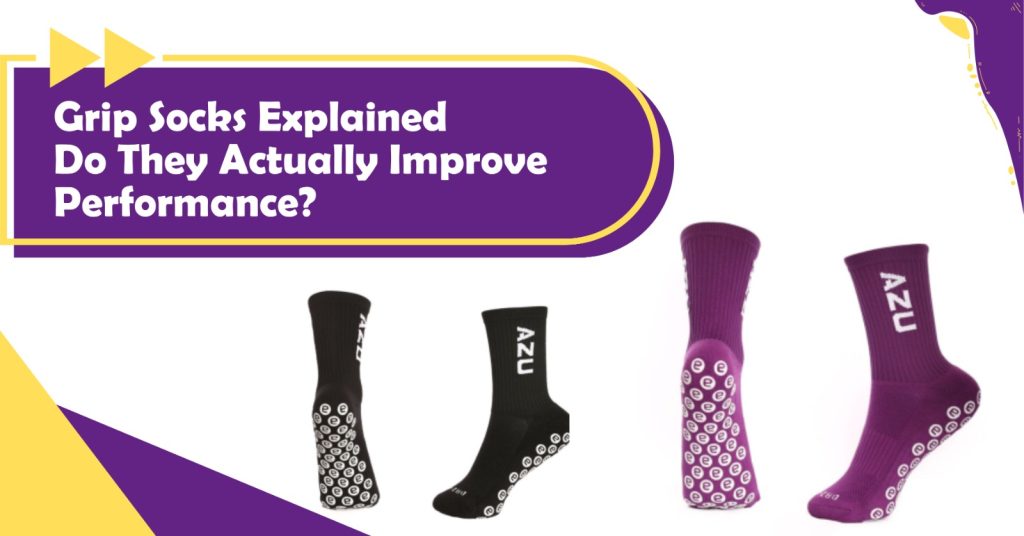
Grip Socks Explained: Do They Actually Improve Performance?
Grip socks have gone from niche accessory to near-standard kit for many footballers, yet plenty of players still wonder whether they actually do anything. Some swear by them, others call them a gimmick, and most want a straight answer. The truth sits somewhere in the middle. Grip socks don’t magically make you faster or more skilful, but in the right situations, they can make the game feel more controlled and predictable.
This explains what grip socks are, how they work inside football boots, and whether they’re worth using for training, matches, or junior players.
What Are Grip Socks?
Grip socks are performance sports socks designed with traction zones, usually silicone or rubber on the sole. These grip elements are placed under the forefoot and heel, where movement inside the boot is most likely to happen. The rest of the sock is typically made from moisture-wicking, breathable fabric to manage sweat and improve comfort.
Unlike standard football socks, grip socks are meant to reduce in-boot movement rather than just cover the foot. That difference is where most of their benefits come from.
How Grip Socks Work Inside Football Boots
Inside a football boot, even a well-fitted one, some foot movement is normal. During sharp turns, acceleration, or sudden stops, the foot can slide slightly before the boot reacts. Grip socks increase friction between your foot and the insole, helping limit that internal movement.
This can lead to:
- better foot stability during changes of direction
- a more “locked-in” feel inside the boot
- less rubbing that causes hot spots or blisters
The effect isn’t dramatic in isolation, but over a full session or match, it can move feel more consistent and controlled.
Do Grip Socks Actually Improve Performance?
Grip socks don’t directly increase speed, power, or technical ability. What they can improve is consistency. When your foot stays more stable inside the boot, movements feel cleaner and more predictable. For many players, that translates into better confidence when sprinting, cutting, or striking the ball.
Any performance benefit is indirect. It comes from reduced distraction, fewer micro-adjustments, and greater comfort rather than raw physical gains. For players who already struggle with foot movement in boots, the difference can feel significant. For others, it may be subtle.
When Grip Socks Make a Real Difference
Grip socks tend to be most noticeable in certain conditions or situations. Players often find them useful:
- on artificial turf, where quick changes of direction are constant
- in wet conditions, when sweat or moisture increases slippage
- during long sessions, when foot fatigue and rubbing build up
- with boots that fit well but still allow slight internal movement
In these cases, grip socks can help maintain the same feel from the first minute to the last.
When Grip Socks May Not Help Much
Grip socks aren’t a fix for poor boot fit. If boots are too large, too narrow, or the wrong shape, socks alone won’t solve the problem. Players who already have a very secure boot-to-foot fit may also notice less difference.
They also won’t replace good technique or conditioning. Grip socks support performance; they don’t create it.
Grip Socks for Junior Players
For junior players, comfort and confidence matter more than marginal performance gains. Grip socks can help reduce slipping and rubbing, which is especially useful for kids who train frequently or play on synthetic surfaces. However, correct boot size and proper socks are still the priority.
Grip socks should be seen as an optional addition for juniors, not a necessity. When used appropriately, they can make training and matches more comfortable without adding complexity.
Common Myths About Grip Socks
There are a few misconceptions worth clearing up. Grip socks don’t make you faster, and they aren’t only for professional players. They’re also allowed in football, as long as uniform rules are followed, which is why many players wear standard socks over them.
Most importantly, they’re not a replacement for well-fitting boots. Think of them as a refinement, not a shortcut.
Are Grip Socks Worth It?
Whether grip socks are worth using depends on the player. If you experience foot movement, blisters, or a lack of stability inside your boots, they’re often a worthwhile addition. If your boots already feel perfectly locked in, the benefit may be smaller but still noticeable over longer sessions.
For players curious to try them, exploring the grip socks available at AZU Sports allows you to compare designs made specifically for football use:
Conclusion
Grip socks don’t transform performance overnight, but they can improve how the game feels under your feet. By reducing internal movement and increasing stability, they help many players move with more confidence and consistency. Used alongside well-fitting boots, they’re a practical upgrade rather than a gimmick.
Understanding what grip socks can and can’t do makes it easier to decide if they’re right for you.
If you’re looking to reduce in-boot movement or improve comfort during training and matches, exploring football-specific grip socks can help you decide whether they suit your playing style.
FAQs
Do grip socks really work for football?
They can improve stability and comfort by reducing foot movement inside boots, especially during sharp movements.
Do grip socks make you faster?
No. Any performance benefit is indirect and comes from improved consistency and confidence.
Are grip socks allowed in matches?
Yes, they are generally allowed, often worn under standard team socks.
Are grip socks good for junior players?
They can improve comfort, but correct boot size is more important.
Do grip socks prevent blisters?
They can help reduce friction, which may lower the chance of blisters for some players.