
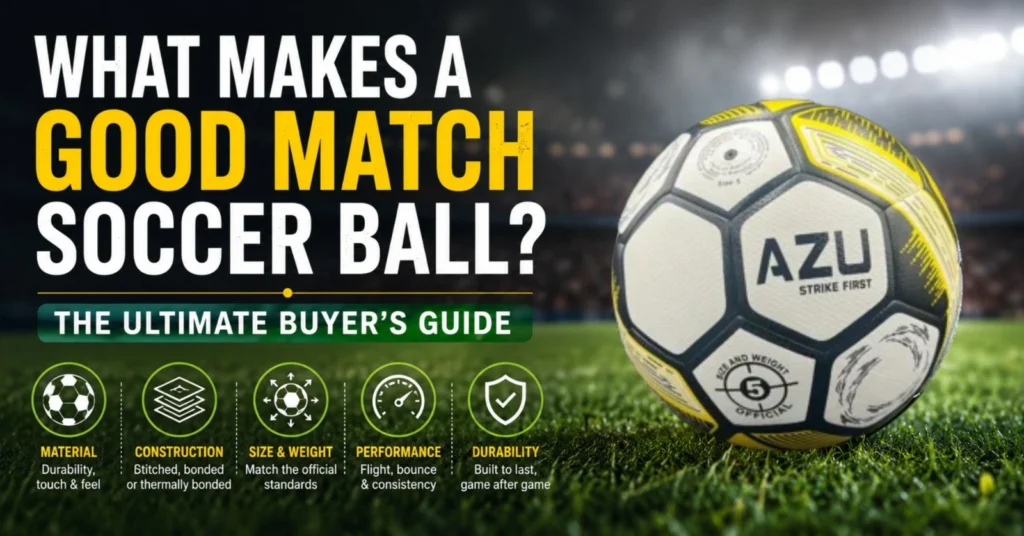
What Makes a Good Match Soccer Ball? The Ultimate Buyer’s Guide
Have you ever wondered why professional soccer matches use certain balls while training sessions use others? You’re not alone. Many players, coaches, and parents struggle to identify what truly separates a high-quality match ball from an ordinary soccer ball.
The truth is that a good match soccer ball delivers consistent flight, predictable bounce, excellent touch, and superior durability. Features such as FIFA certification, thermally bonded construction, premium materials, and precise weight standards all contribute to match-day performance.
In this comprehensive guide from AZU Sports, you’ll learn exactly what makes a great match soccer ball, how FIFA-approved balls are tested, the differences between match and training balls, and how to choose the best match soccer ball in Australia.
What Makes a Good Match Soccer Ball?
A good match soccer ball combines premium materials, accurate weight, consistent shape retention, controlled flight characteristics, excellent touch, durability, and compliance with FIFA standards. The best match balls are often thermally bonded and designed to deliver professional-level performance throughout the game.
In simple terms, a quality match ball should feel predictable every time it is kicked, passed, controlled, or struck.
What Is a Match Soccer Ball?
A match soccer ball is a high-performance football engineered for official matches, offering superior flight, touch, durability, and consistency compared to standard training balls.
Why Is Match Ball Quality Important?
The quality of a soccer ball directly affects player performance.
Poor-quality balls can:
- Fly unpredictably
- Lose shape quickly
- Absorb water
- Produce inconsistent bounce
- Reduce passing accuracy.
A premium match ball helps players perform with confidence because every touch feels reliable.
Key Benefits of a High-Quality Match Soccer Ball
Improved Accuracy
A well-constructed ball follows a predictable trajectory.
This helps players:
- Make precise passes
- Deliver accurate crosses
- Execute long-range shots.
Better First Touch
Premium outer materials improve ball feel.
This leads to:
- Cleaner control
- Faster reactions
- Better dribbling performance.
Consistent Flight
Advanced panel construction minimizes erratic movement.
Players gain confidence knowing the ball behaves consistently.
Enhanced Durability
Quality match balls maintain their shape and performance longer.
This makes them a worthwhile investment for clubs and serious players.
Professional Match Experience
Using a match-grade ball replicates the conditions used in competitive football.
Players develop skills that translate directly into real-game situations.
How Does a Match Soccer Ball Work?
Modern soccer balls combine multiple layers.
Outer Cover
Provides touch, grip, and durability.
Usually made from:
- Polyurethane (PU)
- Premium synthetic materials.
Foam Layer
Improves comfort and responsiveness.
This layer affects:
- Ball feel
- Cushioning
- Control.
Reinforcement Layer
Maintains shape and structural integrity.
Bladder
The bladder holds air.
Common materials include:
- Latex
- Butyl
Latex provides a softer feel.
Butyl retains air longer.
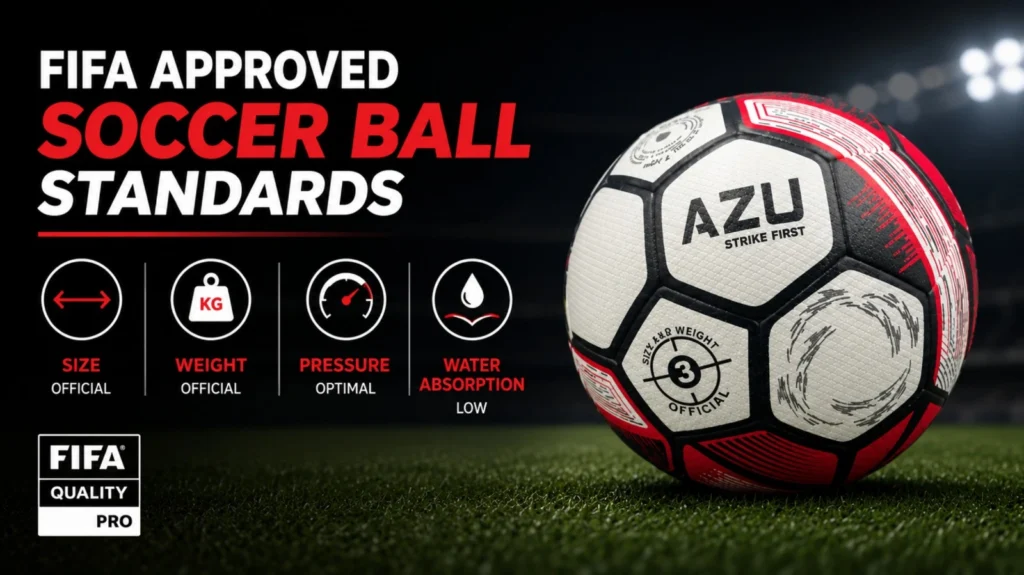
FIFA Approved Soccer Ball Standards
A FIFA approved soccer ball undergoes extensive testing before certification.
FIFA Quality Standards Evaluate:
Weight
Official match balls must weigh between:
410g–450g
Circumference
Must measure:
68cm–70cm
Roundness
The ball must maintain a near-perfect spherical shape.
Water Absorption
Premium balls should resist water absorption.
Bounce Consistency
The ball must produce predictable bounce characteristics.
Shape Retention
The ball must maintain shape after repeated impacts.
Why FIFA Certification Matters
A FIFA-certified ball provides assurance that the product meets professional performance standards.
Thermally Bonded Soccer Ball Technology
One of the biggest innovations in modern football is the thermally bonded soccer ball.
What Is Thermal Bonding?
Instead of stitching panels together, manufacturers use heat and pressure.
The panels fuse seamlessly.
Benefits of Thermal Bonding
- Better waterproofing
- More consistent flight
- Improved shape retention
- Reduced seam separation
- Enhanced durability.
Why Professionals Prefer Thermally Bonded Balls
Thermal bonding reduces panel movement, resulting in a more predictable and stable ball trajectory.
Match Soccer Ball vs Training Ball
Many buyers confuse these categories.
Here’s the difference.
| Feature | Match Ball | Training Ball |
| Performance | Elite | Moderate |
| Flight Consistency | Excellent | Good |
| Touch Quality | Premium | Standard |
| Durability | High | Very High |
| Price | Higher | Lower |
| FIFA Certification | Often | Rare |
| Match Ready | Yes | Usually No |
Which One Should You Buy?
Choose a match ball if:
- You play competitive football.
- You want professional performance.
- You participate in official matches.
Choose a training ball if:
- You train frequently.
- Durability is your main concern.
- The budget is limited.
Soccer Ball Size 5 for Matches
What Size Ball Is Used in Official Matches?
A soccer ball size 5 for matches is the official size used worldwide for players aged 13 and above.
Size 5 Specifications
| Feature | Measurement |
| Circumference | 68-70 cm |
| Weight | 410-450 g |
| Age Group | 13+ Years |
| Professional Matches | Yes |
Most professional leagues use size 5 match balls.
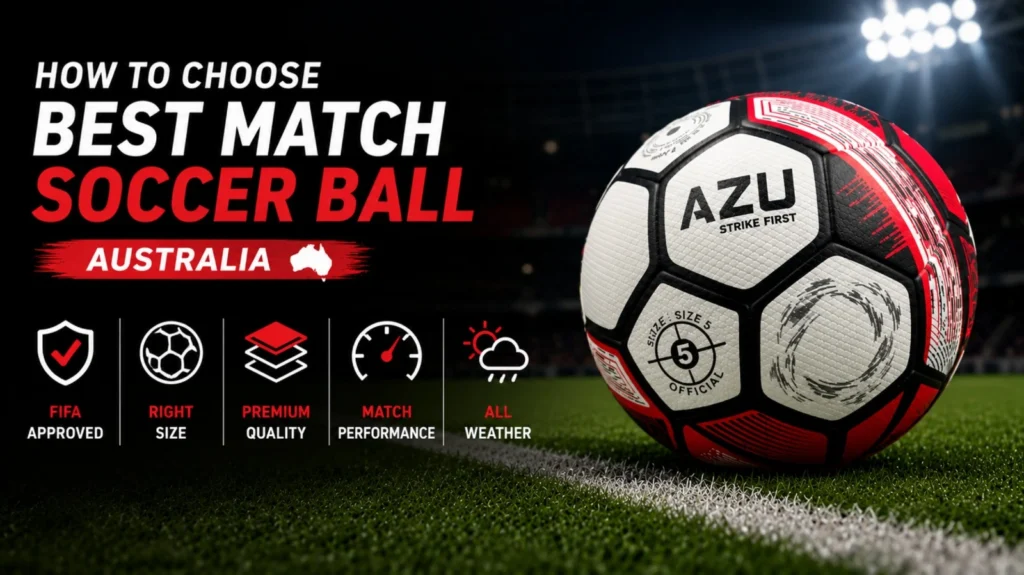
How to Choose the Best Match Soccer Ball Australia
When shopping for the best match soccer ball Australia players trust, consider these factors.
FIFA Certification
Look for:
- FIFA Quality
- FIFA Quality Pro.
These certifications indicate professional-level testing.
Construction Method
Prioritize:
- Thermally bonded construction
- High-quality panel design.
Material Quality
Premium polyurethane covers generally provide superior touch and durability.
Weather Resistance
Australian conditions can vary significantly.
Choose balls with strong water resistance for year-round performance.
Club Requirements
Always check league regulations before purchasing.
Some competitions require specific certifications.
Cost of a Match Soccer Ball
Average Price Range
| Ball Type | Typical Price |
| Entry-Level Match Ball | $30-$60 |
| Mid-Range Match Ball | $60-$120 |
| Premium FIFA Match Ball | $120-$250+ |
Is a Premium Match Ball Worth It?
For serious players, yes.
The improvements in:
- Touch
- Accuracy
- Flight
- Durability.
often justify the investment.
Common Mistakes to Avoid
Buying Based Only on Price
The cheapest ball is rarely the best value.
Ignoring Certification
Certification helps verify performance quality.
Choosing the Wrong Size
Size 5 is required for official matches involving players aged 13 and above.
Overlooking Construction Technology
Thermally bonded balls generally outperform traditional stitched balls for match play.
Using Match Balls for Everyday Training
Constant training can accelerate wear.
Many clubs reserve match balls for games.
Expert Tips from AZU Sports
Rotate Multiple Balls
Using several balls extends lifespan.
Maintain Proper Inflation
Incorrect pressure affects performance and durability.
Always follow manufacturer recommendations.
Store Indoors
Avoid prolonged exposure to:
- Direct sunlight
- Excessive heat
- Moisture.
Clean After Use
Removing dirt helps preserve the outer surface.
Match Your Playing Level
Professional-grade balls are ideal for serious competitors.
Developing players may benefit from quality training balls first.
Best Practices for Match Ball Maintenance
Before Each Match
- Check air pressure
- Inspect panel condition
- Remove surface dirt.
After Each Match
- Wipe clean
- Dry naturally
- Store properly.
Monthly
- Inspect for wear
- Monitor shape retention
- Replace if performance declines.
FAQs
Q1: What is the difference between a match ball and a training ball?
A: Match balls prioritize performance, accuracy, and touch, while training balls focus more on durability and repeated use.
Q2: Are FIFA-approved soccer balls worth buying?
A: Yes. FIFA-approved balls meet strict quality standards for weight, shape retention, bounce, and performance consistency.
Q3: Why do professional soccer balls cost more?
A: They use premium materials, advanced manufacturing processes, and undergo rigorous quality testing.
Q4: Which soccer ball size is used in official matches?
A: Official adult matches use a size 5 soccer ball.
Q5: Why do professional balls feel different?
A: They use superior materials and tighter manufacturing tolerances.
Q6: Can I train with a match ball?
A: Yes, but excessive training can shorten its lifespan.
Q7: How much should I spend on a match soccer ball?
A: Most quality options range between $60 and $150.
Q8: Are expensive soccer balls better?
A: Generally yes, particularly regarding touch, flight, and durability.
Q9: How do I know if a soccer ball is match quality?
A: Look for FIFA certification and premium construction features.
Q10: What pressure should a match ball have?
A: Follow manufacturer recommendations, typically between 8.5–15.6 PSI depending on regulations.
Conclusion
Understanding what makes a good match soccer ball is essential for players, coaches, and clubs seeking peak performance.
The best match balls combine:
- FIFA-approved standards
- Thermally bonded construction
- Premium materials
- Consistent flight
- Excellent touch
- Long-term durability.
Whether you’re competing in local leagues or preparing for elite-level football, investing in the right match ball can elevate your game and improve every touch on the field.
Ready to experience professional-level performance?
Explore the premium soccer ball collection from AZU Sports and discover high-quality match balls designed for accuracy, durability, and consistency. Whether you’re looking for a FIFA-approved soccer ball, a thermally bonded soccer ball, or the best match soccer ball Australia players can trust, AZU Sports has the perfect option for your next game.